


What is PAH?
PAH is high blood pressure in the blood vessels of the lungs, which is different than ordinary high blood pressure that can occur throughout the body. In PAH, the blood vessels in the lungs become narrow and stiff creating more pressure and making it more difficult for blood to flow through these arteries, which means the heart has to pump harder to push blood through them
Common Symptoms
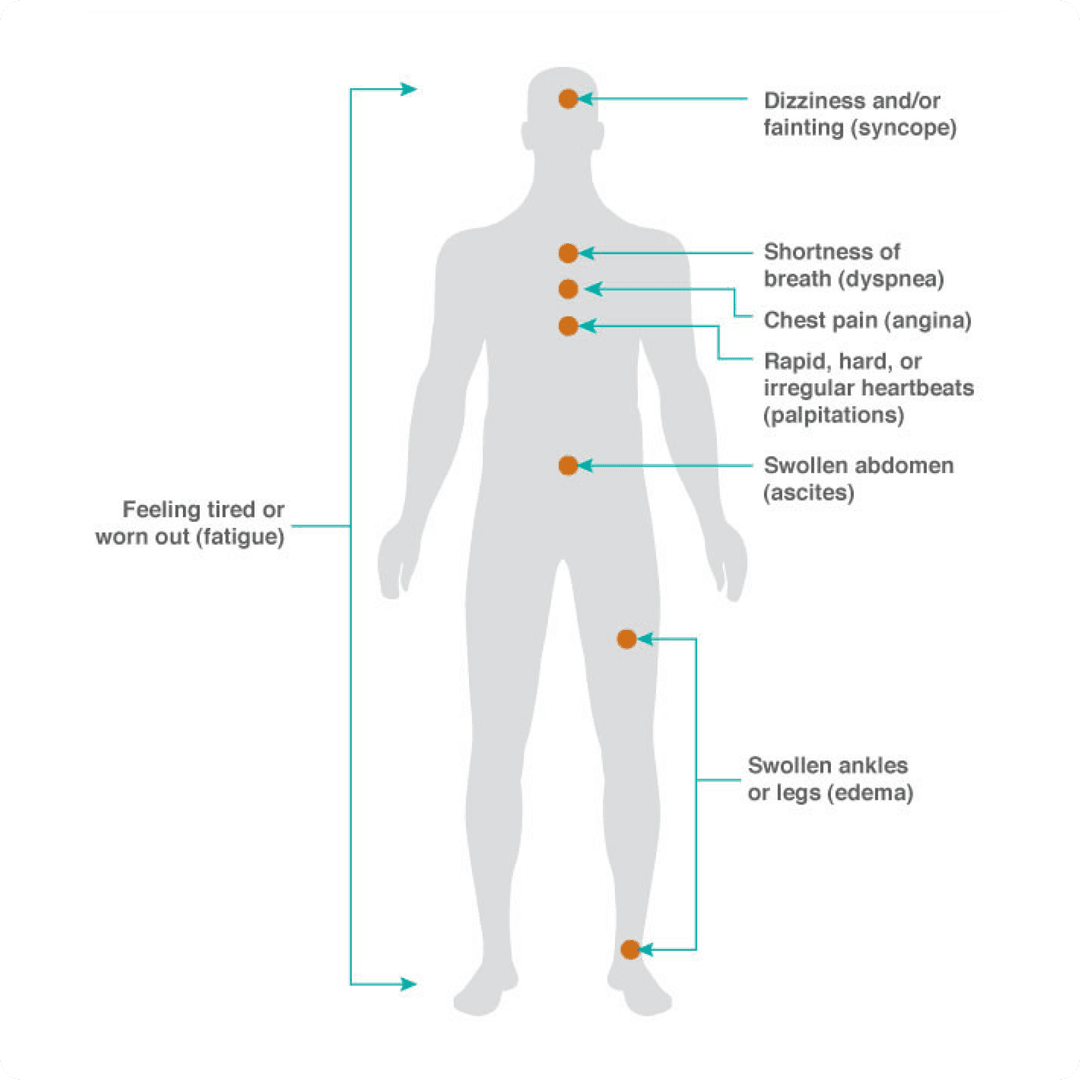
In PAH, high blood pressure in the blood vessels of the lungs affects the ability of the heart and lungs to work properly. Here is how the blood vessels, lungs, and heart function normally compared with those affected by PAH.
Loading tabs...
The symptoms of PAH are similar to the symptoms of other, more common diseases, such as asthma or other lung diseases, and various heart diseases. If you think you are experiencing symptoms of PAH, talk to your healthcare provider.
To diagnose PAH, your healthcare provider will need to obtain a thorough medical history, a physical exam, and results from certain tests and procedures.
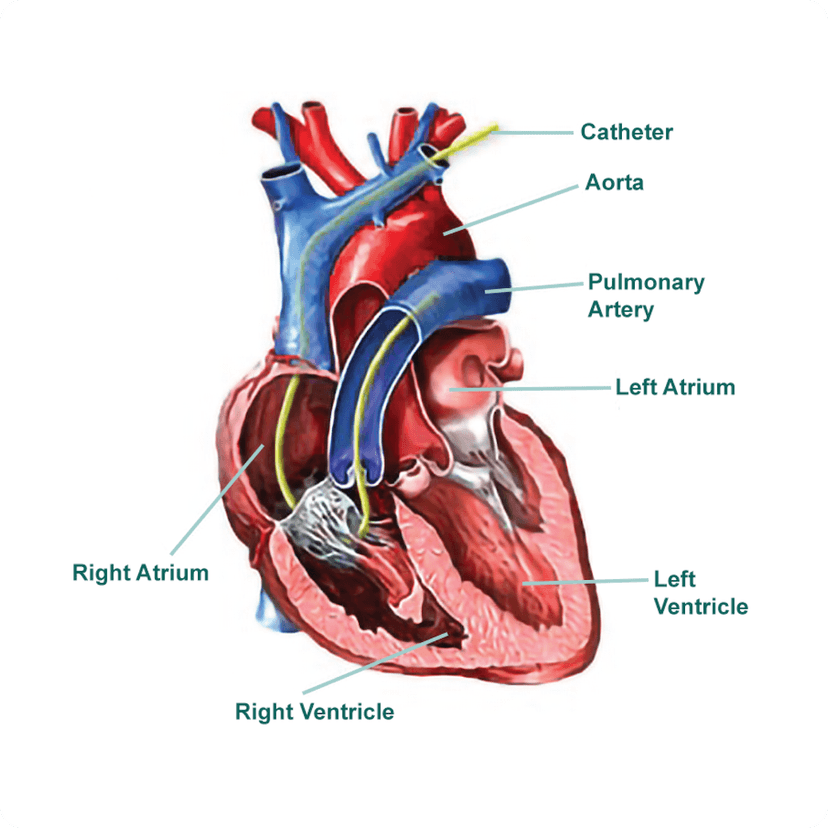
If the preliminary tests suggest PAH, a right-heart catheterization will be done to confirm the diagnosis and to assess how severe the PAH is.
Right-heart catheterization involves inserting a long, thin, flexible tube called a catheter through the blood vessels and into the heart. This procedure allows your healthcare provider to test heart function and blood pressure in the heart and lungs.
This is the only test that can absolutely confirm a PAH diagnosis, and it will only be performed if the preliminary tests have shown results that suggest PAH.
Resources
Here you will find additional resources on pulmonary arterial hypertension (PAH), including PAH organizations and community groups, and downloadable resources to support your treatment with ADCIRCA.